The First Search Result Is Not the Finish Line
First search result not the finish line: keep the useful answer, spot what it leaves open and turn that gap into a focused follow-up search.

You search “why do plane windows have round corners”, find a plausible answer and feel the question close. Before you leave the page, write down what the answer does not explain. The first search result is not the finish line; it can be a lead to check, qualify or follow further.
The aim is not to distrust every answer or search indefinitely. It is to notice when a neat explanation has answered only part of your question. Treat the first result like a label on a drawer: useful for locating something, but not a substitute for examining what is inside.
Keep your original question beside the answer
Copy your question into a note, then summarise the answer in your own words. Keeping both together makes it easier to see whether the result addresses what you asked or a nearby question the page happened to cover.
For instance, “Why do plane windows have round corners?” asks for a cause. A result might offer a claim about rounded edges and stress. Treat that as an explanation to verify, not as an established engineering account: the result alone does not show how the mechanism works, whether it is the whole explanation or what evidence supports it.
Do not narrow the original question too soon. A broad question can contain several smaller ones, and preserving its wording helps you see what the first answer has left open.
Write down what the result actually claims
Summarise the result in a sentence or two without copying its wording. Record its main claim and the reason it gives, then note whether the page presents a mechanism, describes a design decision, cites a source or simply repeats a familiar explanation.
These are different kinds of answers. An explanation of a proposed mechanism does not, by itself, establish who made a particular decision or how broadly the claim applies.
Keep any uncertainty the page acknowledges. Words such as “often”, “can” or “one reason” limit a claim; removing them in your notes can turn a qualified explanation into an absolute one.
Name one specific gap in the explanation
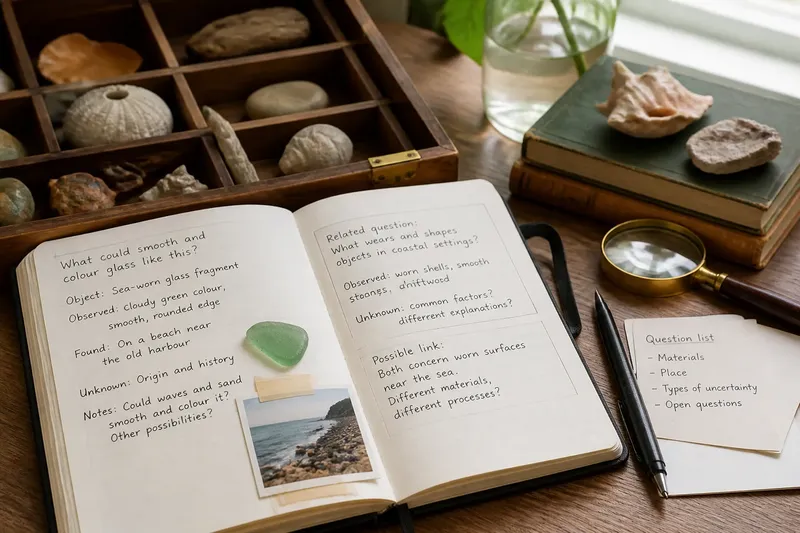
Write a short “still unclear” note. Identify a missing cause, definition, comparison, condition or source; “I need to know more” is too vague to guide a useful search.
Say you have found a page making a claim about aircraft-window shape and stress. The starting point is that claim, not a verified technical explanation. Your action is to note that the link between the proposed mechanism and cabin pressure remains unclear. The result is a more focused question to check, without treating the original claim as fact.
Use these prompts to identify a gap, and choose the decision that fits what you observe:
- Cause: Check whether the answer explains what makes the stated effect happen. If it names an effect but not its cause, search for the mechanism; otherwise, keep the explanation and note any remaining qualification.
- Meaning: Check for a technical term you cannot explain in plain language. If one appears, look it up separately; otherwise, move on to the next gap.
- Scope: Check whether the page says when its claim applies. If conditions or exceptions are unclear, search for those limits; otherwise, record the scope the page actually states.
- Comparison: Check whether your question depends on comparing designs, materials or situations. If it does, search for that comparison; otherwise, avoid adding one that your question does not need.
- Basis: Check who makes the claim and whether the page points to supporting material. If the basis is missing, look for a source that explains it; otherwise, follow the cited material if the claim matters to your question.
- Question fit: Check whether the result answers your original wording or a narrower question. If it is narrower, keep it as a partial answer and write the missing part; otherwise, decide whether the answer serves your purpose.
Choose the gap that most affects your understanding. Listing every possible uncertainty can turn a small curiosity into an unwieldy project. The point is to preserve one meaningful opening, not to dismiss the answer.
Turn the gap into a focused search
Convert the gap into a question a search engine or book index can handle. Add the specific subject and the missing link. For the aircraft-window question, you might search for an explanation of how cabin pressure relates to window design, while treating any technical account you find as something to check against its sources.
If results keep repeating the same simplified explanation, change the terms. Try a technical phrase from the page, the name of a material or mechanism, or wording such as “how does” and “under what conditions”. If an unfamiliar term blocks you, look it up separately before pursuing the larger question.
A different result is not automatically a better one. Check whether it addresses your specific gap, explains how its claim follows and distinguishes its limits. A page that repeats the same claim at greater length may add no useful lead.
Check the source before carrying a claim forward
Inspect the page around the explanation. A manufacturer’s page may describe a product’s intended design; a textbook may discuss a general mechanism; a discussion forum may show what readers find confusing. Each can help with a different question, but none should be treated as interchangeable.
Look for an author or organisation with a clear connection to the subject, relevant context and links to material behind the claim. Follow a source link when the answer depends on it. If pages disagree, record what they disagree about rather than blending their claims into a confident-sounding sentence.
For personal curiosity, you do not need to review every page formally. You do need enough context to avoid mistaking a brief summary, sales explanation or unsupported assertion for a complete account.
What should you do after the first plausible result?
How can I tell whether the answer addresses my question?
Compare the result with your original wording. Check whether it explains the central “why”, “how” or “under what conditions” you wanted to understand; if it answers only a narrower point, keep it as a partial answer and record what remains.
Should I keep searching if several pages agree?
Agreement can be useful, but several pages may repeat the same source or brief explanation. Look for a source that independently addresses your gap, rather than treating similar wording as separate support.
What if I cannot find a clear follow-up answer?
Define an unfamiliar term or split a compound question into smaller parts. If the trail still runs cold, note what you tried and leave the question open rather than filling the gap with a guess.
When can I stop following a lead?
Stop when the answer meets the purpose of your question or the next search would add detail you do not want. You can stop with a clearly marked uncertainty rather than presenting a partial answer as complete.
Save the lead so you can return to it
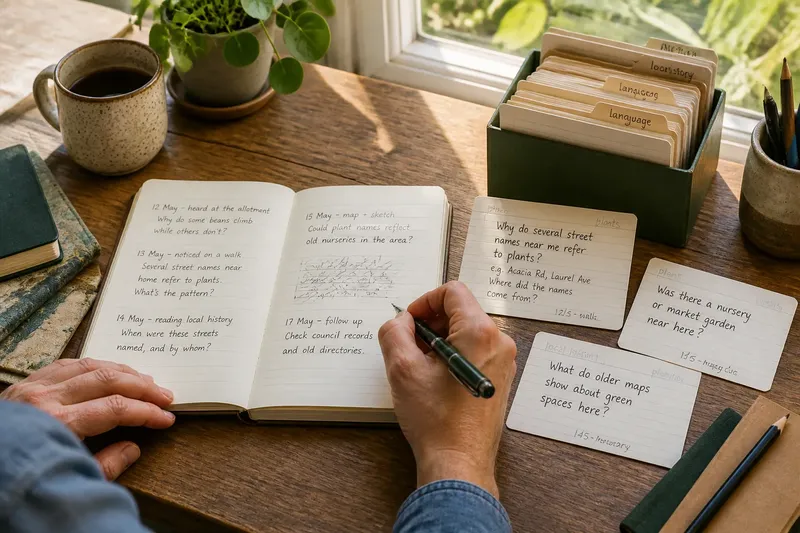
Keep the follow-up question beside your answer and add a pointer to the page or source that prompted it. A notebook, notes app or saved browser link will do; choose a place where you can find the question again.
Make the note readable without reopening every tab. Include the original question, the current answer, what remains unclear and the next search phrase. If your understanding changes, add a new note rather than silently replacing the earlier one.
When you share the answer, share its boundary too. You could say, “I found a page making a claim about rounded corners and stress, but I have not checked how it relates to cabin pressure.” That gives someone else a clear point to question or clarify without passing along an unverified technical explanation as fact.
The first search result can be a useful place to begin without being the last word. Keep one specific unanswered question beside it. When you return, you will know what to check next and which claim still needs support.